
WELCOME BONUS 300%
UP TO €2000 + 100
FREE SPINS
UP TO €2000 + 100
FREE SPINS
Home → Games
Casino games at Sportuna
Blackjack flow: cards, decision, payout 3:2
In a six-deck Blackjack game at Sportuna, a payout of 3:2 is observed, which results in a house edge of 0.15%. This specific payout structure is associated with a single-deck variant, offering a theoretically higher RTP of 99.85%. The decision-making process for players involves assessing card values to achieve a total closest to 21 without exceeding it.
The optimal strategy in this scenario aims to minimise the house edge, which stands at 0.15% for a single deck with classic rules. This contrasts with a 6:5 payout on a six-deck game, which increases the house edge by 1.39 percentage points. Players opting for the 3:2 payout are therefore engaging with a game offering a significantly lower casino advantage.
For a player betting €10 on a Blackjack hand with a 3:2 payout, the winnings would amount to €15. This outcome is directly influenced by the game's rules and the player's decisions. The house edge of 0.15% signifies that, over an extensive number of hands, the casino expects to retain 0.15% of all wagers placed.
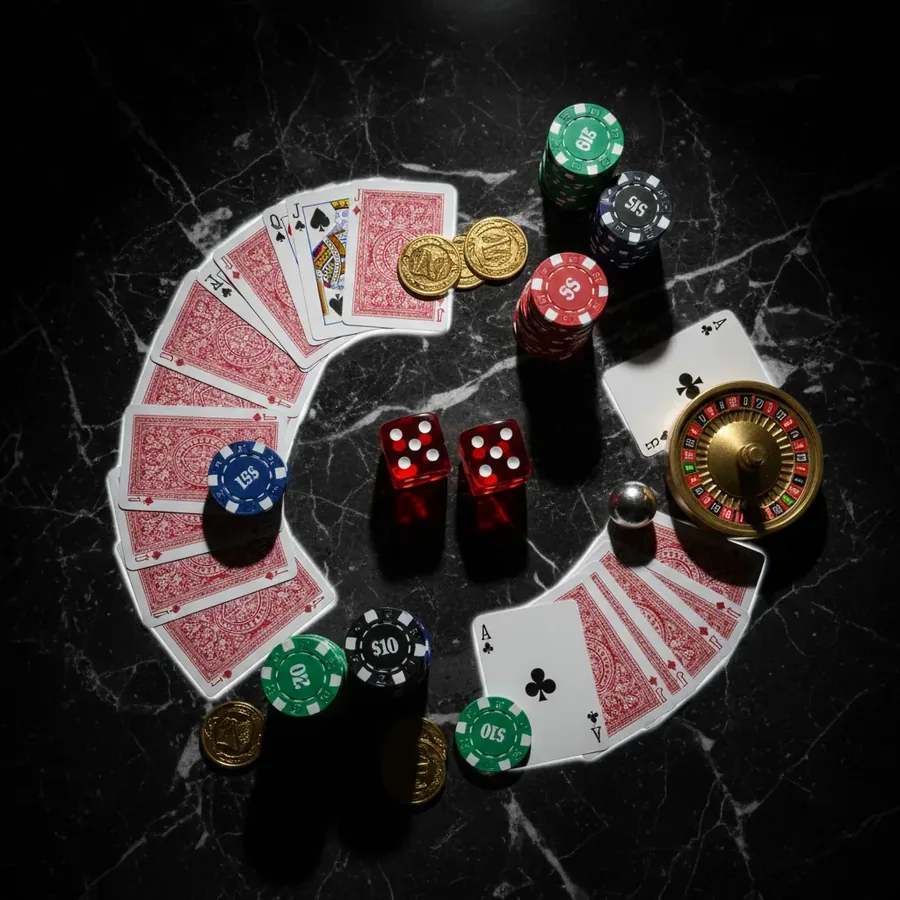
Dozen 2:1: Twelve Numbers, One Third Coverage
European Roulette, featuring a single zero and 37 sectors, presents a Dozen bet with a 2:1 payout. This bet covers twelve specific numbers, constituting one-third of the available outcomes excluding the zero. The house edge for European Roulette is consistently 2.70% across all bet types due to the payout structure for 36 sectors.
A €10 wager on a Dozen bet in European Roulette, if successful, yields a return of €20 in profit, alongside the original stake. The RTP for European Roulette stands at 97.30%, meaning that, theoretically, for every €100 wagered, €97.30 is returned to players over the long term. This consistent edge applies to all bets, including Dozens.
The statistical advantage for the casino on a Dozen bet is derived from the fact that only 36 numbers are paid out, despite 37 sectors existing. This structure means that a bet covering 12 numbers pays as if there were only 36 numbers in total. The consequence for the player is a fixed house edge of 2.70% on all wagers made.
When is Splitting Aces and Eights Sensible?
The decision to split Aces and Eights in Blackjack is a critical strategic choice directly impacting the player's potential outcome. While splitting Eights is generally advised to improve a player's hand from a disadvantaged starting point, splitting Aces is often a more nuanced decision, particularly in games with specific rule sets.
In a six-deck Blackjack game, the house edge is 1.85% when the payout is 6:5. This game variant is less favourable for players compared to a 3:2 payout. The rules regarding splitting Aces, such as whether players receive only one card per split Ace, can significantly alter the optimal strategy and the resulting house edge.
Specifically, splitting Aces in a typical scenario is recommended because two hands starting with an Ace offer better potential than a single hand with a value of 12. However, the impact of subsequent card draws and the casino's specific rules on split Aces must be considered. The house edge of 1.85% means that such strategic decisions are made within a context where the casino has a persistent advantage.
Baccarat commission: 5 percent on each Banker win
In Baccarat, the Banker bet, considered the most advantageous for the player, carries a 5% commission on each winning wager. This commission is applied to the winnings, effectively reducing the payout from a standard 1:1 to 0.95:1. The game utilises an eight-deck shoe, and this commission is a key factor in maintaining the casino's edge.
The RTP for the Banker bet, after the 5% commission is factored in, is 98.94%, resulting in a house edge of 1.06%. This figure represents the average portion of each wager the casino expects to retain over the long term. The commission is a standard mechanic designed to balance the inherent statistical advantages the Banker position holds in Baccarat.
For a player betting €10 on the Banker and winning, the payout would be €9.50, with the €0.50 representing the commission. This system ensures that even the best bet in Baccarat maintains a slight advantage for the house, influencing player strategy and bankroll management. The standard deviation for this bet is reported at 0.93.
Read Statistics of Last 500 Rounds Correctly
Analysing the statistical outcomes of the last 500 rounds in games like European Roulette (RTP 97.30%, house edge 2.70%) is crucial for understanding game behaviour, not for predicting future results. These statistics reflect past performance, where each outcome is independent due to the Random Number Generator (RNG) employed by the casino.
For instance, if the last 500 rounds of European Roulette showed an unusually high frequency of red outcomes, it would not imply a higher probability of black in subsequent rounds. The house edge of 2.70% remains constant, ensuring the casino’s theoretical advantage over time, regardless of short-term statistical deviations observed in a limited sample.
Understanding these statistics correctly means recognising them as a historical record rather than a predictive tool. A bet on a Dozen, paying 2:1, within this context, still operates under the fixed 2.70% house edge. Therefore, past results, even over 500 rounds, do not alter the fundamental mathematical probabilities governing each new spin.
Game categories at a glance
| Category | Examples | Stakes From | Highlight |
|---|---|---|---|
| Slots | Vikings Go Berzerk, Big Bass Bonanza, Book of Demi Gods 2 | 0,10 EUR | thousands of titles |
| Table games | Roulette, Blackjack, Baccarat | 0,50 EUR | classic rules |
| Live casino | Crazy Time, Speed Baccarat | 0,20 EUR | real dealers |
| Jackpot games | Mega Moolah, Divine Fortune, Age of the Gods | 0,20 EUR | progressive pools |
| Instant games | Aviator, Plinko, Mines | 0,10 EUR | fast rounds |
| Video poker | Jacks or Better, Deuces Wild | 0,25 EUR | strategy based |
Casino Hold'em: Ante Payout Up to 100:1
The Casino Hold'em Ante bet offers a maximum payout of 100:1 for a Royal Flush. This high payout is part of the game's structure, where players make an Ante bet and then decide to Call or Fold after the flop. The game's theoretical RTP for the Ante bet is 99.18%.
The Call bet in Casino Hold'em always pays 1:1, regardless of the hand formed. However, the Ante payout varies significantly, with a Straight paying 1:1 and a Full House paying 3:1. This variation contributes to the overall game mechanics and player engagement.
A dealer's pair under a 4 Ante results in a Push for the Ante bet, meaning the bet is returned to the player. The overall house edge on the Ante bet is 2.16%, but the risk element on the Call bet results in a lower effective house edge of 0.82% per round. A player wagering the maximum €2,000 on the Ante bet could see a potential win of €200,000 if they hit the Royal Flush. However, the wagering requirement for the 300% welcome bonus means this bonus money must be wagered 40 times, totaling €240,000 in turnover for the €2,000 bonus amount.
Columns and Dozens Pay 2:1 in Roulette
In European Roulette, both Columns and Dozens bets offer a payout of 2:1. These bets cover 12 numbers each, out of the 37 sectors on the wheel. The game's RTP stands at 97.30%, with a house edge of 2.70%.
The payout structure for European Roulette is based on the 37 sectors available (numbers 1-36 plus a single zero). This consistent payout ratio across different bet types contributes to the overall house edge. The welcome bonus, offering 300% up to €2,000, requires wagering. If a player deposits €666.67 to claim the full €2,000 bonus, they would need to wager €80,000, as table games like Roulette contribute 10% to the wagering requirement.
The total number of sectors on a European Roulette wheel is 37, meaning a 2:1 payout on a bet covering 12 numbers represents a calculated return. For example, a €10 bet on a Column would return €30 if successful. This contrasts with American Roulette, which has a higher house edge due to an additional '00' sector.
Straight, Split, and Corner: Three Terms Briefly Explained
A Straight bet in Roulette is a wager placed on a single number, offering the highest payout of 35:1. This bet covers only one of the 37 sectors on a European Roulette wheel. The house edge for this game is 2.70%.
A Split bet covers two adjacent numbers on the Roulette layout and pays 17:1. A Corner bet, also known as a Square bet, covers four numbers and pays 8:1. Both of these bets are popular amongst players seeking a balance between payout potential and probability.
When considering the 300% welcome bonus up to €2,000, any wagers placed on Roulette contribute 10% towards the wagering requirement. For instance, a €10 Straight bet that wins would return €360 (€350 winnings + €10 stake). If this was part of the wagering, only €1 would count towards the €80,000 turnover required for the full bonus if a €666.67 deposit was made.
Soft 17: the Ace counts 11 or 1
In Blackjack, a 'Soft 17' hand refers to a hand containing an Ace that can be counted as either 11 or 1. This rule specifically affects the dealer's actions, as some variations dictate that the dealer must hit on a soft 17. The house edge for this rule variation is an additional 0.22 percentage points.
The Dealer Hits Soft 17 rule increases the house advantage compared to a dealer standing on all 17s. This impacts the RTP of the game, making it less favorable for the player. For example, a standard Blackjack game with 6 decks and a 3:2 payout has an RTP of approximately 98.15% when the dealer hits soft 17, compared to 99.85% for a single deck game with classic rules.
Players aiming to meet the 40x wagering requirement on the 300% welcome bonus of up to €2,000 will find that Blackjack contributes only 10% to this requirement. This means that for every €10 wagered on Blackjack, only €1 counts towards the €80,000 needed to clear the bonus if a €666.67 deposit was made. Therefore, to wager the full bonus amount at a 10% contribution rate, a total of €800,000 would need to be bet on Blackjack.
American Roulette: 5.26 Percent Due to Double Zero
American Roulette features a double zero (0 and 00), which increases the number of pockets to 38. This variation results in a higher house edge of 5.26% compared to European Roulette. The RTP for American Roulette is consequently lower at 94.74%.
The Five Number Bet in American Roulette, covering 0, 00, 1, 2, and 3, is particularly disadvantageous with a house edge of 7.89%. This bet is unique to the American table and does not have an equivalent on the European version, highlighting the structural differences in house advantage.
To satisfy the 40x wagering requirement on the 300% welcome bonus of up to €2,000, players betting on American Roulette will find the higher house edge impacts their potential to clear the bonus. If a player deposits €666.67 to claim the full €2,000 bonus, they must wager €80,000. Given Roulette's 10% contribution, this translates to €800,000 in total bets placed on the Roulette table to meet the requirement.
RNG Roulette vs. Live Table: Four Clear Differences
RNG European Roulette, with its single zero sector, offers a theoretical Return to Player (RTP) of 97.30%, resulting in a house edge of 2.70%. This edge applies uniformly across all bet types, from single number Straight bets paying 35:1 to even-money Red/Black bets paying 1:1. This consistency means the casino's advantage remains constant regardless of the bet placed.
Conversely, American Roulette, featuring both a '0' and '00', presents a significantly higher house edge of 7.89% on its 'Five Number Bet'. This specific wager covers 5 out of 38 sectors, with payouts of 6:1, making it the least favourable bet on the American wheel. Standard American Roulette bets have a house edge of 5.26%.
Live dealer roulette, while often mirroring European or American rules, introduces a human element and potentially different operational speeds. The underlying mathematics of the game, however, remain bound by the specific roulette variant being played. Players should verify the exact rules and payout structures presented by the live dealer studio to understand the true house edge.
Straight, Split, and Corner in direct comparison
A Straight bet in European Roulette covers a single number and pays 35:1, meaning a 1€ bet returns 36€ including the stake. This bet, like all others on a European wheel with a 97.30% RTP, carries a house edge of 2.70%. The theoretical payout is based on 37 possible outcomes.
A Split bet covers two adjacent numbers and pays 17:1. With a 97.30% RTP on European Roulette, the house edge for this bet remains 2.70%. For a 1€ Split bet, the potential return is 18€, reflecting the reduced probability compared to a Straight bet.
The Corner bet, covering four numbers, pays 8:1. In European Roulette, this bet also operates within the 2.70% house edge, consistent with the game's overall RTP of 97.30%. A 1€ Corner bet would yield a 9€ payout if successful, representing a higher frequency of smaller wins compared to a Straight bet.
Before Double Down: read the open dealer card
The strategic decision to Double Down in Blackjack is directly influenced by the dealer's upcard. In standard rules, a player can double their initial bet in exchange for receiving only one more card. Understanding the dealer's potential hand strength is paramount to making an informed Double Down choice.
For instance, when facing a dealer's weak upcard, such as a 5 or 6, the probability of the dealer busting increases significantly. This situation often presents a favourable opportunity for the player to Double Down, as the dealer is more likely to exceed 21 with their subsequent cards.
Conversely, if the dealer shows a strong upcard, like an 8, 9, or 10, the player should exercise caution with the Double Down. In these scenarios, the dealer is statistically more likely to form a strong hand, making it a riskier proposition to commit additional funds to the bet.
Dozen 2:1 Hits 12 of 37 Numbers
A Dozen bet in European Roulette covers a group of twelve numbers (e.g., 1-12, 13-24, or 25-36) and pays 2:1. Despite covering nearly a third of the wheel's possible outcomes, this bet is subject to the standard 2.70% house edge inherent in European Roulette, which has an RTP of 97.30%.
When a Dozen bet is placed, a winning outcome yields two times the original stake plus the stake back. For example, a 1€ Dozen bet that wins returns 3€ in total. This payout structure is designed to maintain the casino's statistical advantage over the long term.
This bet type encompasses 12 out of the 37 available numbers on the European wheel. The remaining 25 numbers, including the single zero, are losing outcomes for this specific wager. The inherent house edge ensures that the casino retains approximately 2.70% of all wagers over an extended period.
Minimum deposit 20 EUR, table games count 10 percent
To be eligible for the 300% welcome bonus up to €2,000, players must make a minimum deposit of 20 EUR. This initial deposit is the basis for calculating the bonus amount, with the maximum bonus capped at €2,000. For example, a deposit of 666.67 EUR would yield the maximum bonus.
The bonus funds are subject to wagering requirements, and different game types contribute at varying rates towards fulfilling these requirements. Table games, which include options like Roulette and Blackjack, contribute only 10 percent towards the total wagering turnover. This means 10 EUR wagered on table games counts as 1 EUR towards the requirement.
Consequently, to convert the bonus funds into withdrawable cash, a substantial amount of wagering will be necessary when primarily playing table games. For instance, to clear a bonus requiring 40x wagering on a 666.67 EUR deposit (resulting in a 2000 EUR bonus), a total turnover of 80,000 EUR would be needed, with table game contributions being significantly slower.
Contact
Live - online chat
Banking









Providers












Sportuna Casino 2026